The time has come”, the walrus said, “To talk of many things. Of shoes, and ships and sealing wax, of cabbages, and kings. And why the sea is boiling hot, and whether pigs have wings”.
For the last several years, I’ve been down a rabbit hole, or maybe a snake den or a gopher tortoise burrow. See, my now 9 yr old has been into things with scales since she was tiny. And I mean from a few months old, when, instead of latching onto the adorable little elephant blanket or the stuffed cat as her lovey, she latched onto a Folkmanis sea serpent puppet, christened it “Draggy”, and made it her constant companion. By age 2, she’d demand to go to the “mini-zoo” (aka pet store) and spend a lot of time watching the “ ‘nake!!”. (Oh, and the real zoo, too-but the “mini-zoo” was a lot closer to home). As she’s gotten older, in keeping with my “follow the child” homeschooling philosophy, this has led us to meet snake keepers and breeders, to plan vacations around places like the Kentucky reptile zoo, and to spend a lot of time outside, attempting to see snakes in the wild, and usually failing. Plus multiple scaled housemates and dead rodents in the freezer.
Which helps to explain why, on a late July Wednesday, I found myself checking in for the 2014 Joint Meeting of Icthyologists and Herpetologists in Chattanooga. While I’ve gone to a lot of conferences, I can’t say I’d ever expected to be in a group of Herpetology and Ichthyology grad students and working professionals, especially not as the “accompanying person” for the actual conference attendee, my 9 yr old daughter, who, by the good graces of the Society for the Study of Amphibians and Reptiles, with the help of a wonderful friend and mentor, had been granted a pre-baccalaureate scholarship to attend said meeting.
Anyway, the first day seemed almost too easy at first, mostly because it was a day of professional meetings for the boards of the various professional organizations participating. That night, though, it started to become real. SSAR runs a mentoring program for first-time attendees of the meeting to help them navigate the rather large conference, because it can be overwhelming even for graduate students. I could tell my daughter felt that way, as we went around the table and introduced ourselves, and both the mentors and the first-time grad student attendees all were talking about their primary research topic. I’ll forever be grateful to the other pre-baccalaureate student and mom at that initial meeting, who introduced themselves as “Hi, I’m Zack, and I haven’t done much yet, but I want to learn more” and “Hi, I’m Pam-I’m just here because Zack needed a ride”. That was more my speed, and I could see Alli visibly relax a bit, although she was still pretty shy. Her official mentor wasn’t there yet, but she had a chance to talk 1-1 with Andrew Durso, who definitely got her attention when she realized that he writes one of her favorite blogs about snakes (snakesarelong.blogspot.com). She shared her blog link, although her blog is about half snakes and about half neopets fan writings, and they started discussing reciprocal links, plug ins, and twitter feeds. Definitely heading down that rabbit hole, Alice! Watch out for giant caterpillars….
That was followed by the SSAR travelogue, focused on African amphibians, and it set the stage for the many sessions we’d attend the following four days. Alli was focused and paying close attention, taking notes in sketches and words, noting things to look up later. I’d been worried that she’d have trouble, especially since, as a homeschooled student, she has a lot of flexibility to get up, move around, bounce, talk, and structure her learning to fit her, but she had no trouble in that lecture hall. She was an excited kid that night.
The next day started off bright and early, with a session on 50 years of herpetology. We ended up sitting at the back of the room, and again, she was taking notes. It was much, much more crowded than the day before, and that grew as the day progressed. What surprised me was how well my 9 yr old was following content that often got quite deep. There were a few places, here and there, which went over her head (and mine), especially when the content got into biochemistry or into molecular genetics, but especially in the ecology and ethology sessions, she was right with it. However, Thursday she was also pretty shy and definitely felt uncomfortable outside the sessions. That really showed at the student reception. She got to meet several of her heroes, people she’s read papers and books by and recognized their names, including collecting several autographs (which, I gather based on reaction, isn’t something that you usually get as a working biologist). However, being in a group of mostly graduate students was definitely uncomfortable, and even when the mentoring program students gathered together, she faded into the background. I realized, then, how much she was doing what she’d learned-that when adults are together, kids stay in the background and don’t talk much unless asked direct questions. Except that, at this point, we were there for her, not for me. It was definitely a sign of how young she really is. She relaxed quite a bit when one of her best friends-the daughter of her herpetology mentor who was responsible for us being here in the first place showed up. Being one of two 9 yr olds is much easier than being the only one. The opening reception at the Tennessee aquarium followed. The dinner and conversation, again, were a bit on the hard side, where she really didn’t know what to say, but the aquarium met with her definite approval. It didn’t hurt any that all the other “accompanying persons” were there-including a lot of children of conference attendees.
Friday was really where it started to turn a corner. She enjoyed her morning sessions, but the point at which I realized she had found her niche happened when she got into a conversation with two people right before a session-which turned out to be the presenter and his PhD adviser. Not only did she relax as she talked to them and shared what she was doing, but she felt confident enough to ask her question at the end of the session, and basically floored everyone, very much including me. I’ve been through more than a few conference talks, plus thesis and dissertation defenses. Questions are carefully weighed, carefully thought out, and designed to probe. And Alli showed she could play that game quite clearly-that she’d understood the project completely, and was thinking about the next step. Before then, everyone seemed to want her to be there and want to feed her interest, but at that point in the conference, things started to shift. Suddenly, my 9 yr old was not just an interested kid and part of the future, but honestly belonged there. I could see that she felt that way, too. This was her world.
The poster session was something I’d thought would be a good fit for Alli. Honestly, I’d thought the posters would work better than the talks, since they tend, in my experience, to be a lower level of research and smaller scale studies, and you can talk 1-1 with the research team much more casually. However, it didn’t work out that way. I hadn’t thought about the fact that the focus was going to be on impressing the faculty, and I hadn’t thought about the fact that a poster session at a big conference is a crowded place. We did get to talk to a group from Austin Peay State University, which is fairly close to us geographically and has a strong herpetology school, and found out about the regional conference in September, which we’re planning to attend, but that was about it.
Saturday was more of the same. Alli had found her flow, found her niche, and was happy. It was smooth sailing. We were both getting tired, me more than her, but she was comfortable. We went to lunch with her conference mentor, 17 yr old Shelby Miller, who had paved the path for Alli when she’d started attending at age 12, years before, and I only wish we’d done that early. Shelby reassured Alli that some of what she was experiencing (like the fact that the people at the poster session didn’t want to talk to her) was typical, that it was indeed true that in most cases the professionals were more accepting than the students, and that it would come with time. Alli won a book in the grad student book raffle, which thrilled her, and she got some 9 yr old time with a friend, which was even better.
Sunday was a bit frustrating, in that several sessions she’d planned to attend ended up getting cancelled. However, she loved the sessions she did attend, got to talk to more people, and had really relaxed. She was comfortable, she was happy, and she’d had a great time. She also got more friend time, as the conference wound down.
All told, it was an amazing experience, even for someone who got dragged into snakes by my child and who took her last biology class over 20 years ago. Watching Alli grow even over a 5 day time and watching her flourish, from the kid who didn’t know what to say when asked what she wanted to do on Wednesday to the child who could confidently tell a Penn State professor that she was most interested in ecology and herp diversity in the wild by the end of the week was nothing short of amazing.
I’m probably going to forget someone, but I really need to thank all the people at SSAR who made this happen, especially Ann Paterson, who got the ball rolling, the SSAR board who gave Alli the scholarship this year, Kris Kaiser and Andrew Durso, who ran the mentoring program, Shelby Miller, who gave of her time to support Alli through the conference, the ASIH grad students who ran the book raffle (and applauded when Alli got her book on Saturday, after seeing her enthusiasm all week), and the professors and conference attendees who reached out and talked to her directly, especially early in the week when she was shy, especially Stan Trauth and Robert Aldridge, who took over introducing her to people and helped make her relax at the student reception, Gad Perry, who talked to us and was supportive at the opening reception, Jim Spotila and Dane Ward, who were responsible, more than anyone else, for Alli coming out of her shell and feeling comfortable and that her thoughts were valid in the sessions, and Tracy Langkilde, who, at the end of the week, validated the whole experience. Thank you for making this so special for my child, and I look forward to seeing you next year in Kansas.
Monday, August 11, 2014

Sunday, July 21, 2013
Back to Ssssschool!
Every year, Alli picks a classroom theme to decorate our homeschool room-this was something she started a couple of years ago, and it really is a big part of her "back to school" year. This year, she decided she wanted snakes and other reptiles-so we've been spending some time getting ready. Compared to last year's Frog theme, there wasn't much available-which has made it just more fun.


 Pocket charts

 Bulletin board displays (the background is fabric)
 Daily checklist board (magnet board). Plus Harry the Hydra, our "school" mascot
 Alli's desk, along with the special school supplies we've managed to locate so far.
 Backpack-gator chair pocket (which is holding her nature study kit-including journal, binoculars, hand lens, and homemade snake hook).
 Workboxes
 Special notebooks and book covers


Door display


Friday, October 19, 2012
Mythology Club-My favorite Monster!
For October, our young Mythologists were challenged to choose a Mythological creature, make a trading card for it, and share it with the group. The kids also made lego models for mythological creatures and election posters for their favorite monster. It was a small group, but I think they had fun!


 |
| Hydra election poster |

 |
| Hydra |
 |
| Satyr |

 |
| Pegasus |
 |
| The Gorgons |
 |
| Chiron the Centaur |

 |
| The whole group |
 |
| Centaur riding |
 |
| Pegasus |
 | |
| Good luck, Hercules! You'll need it! |


Monday, October 1, 2012
Snakey Science fun!
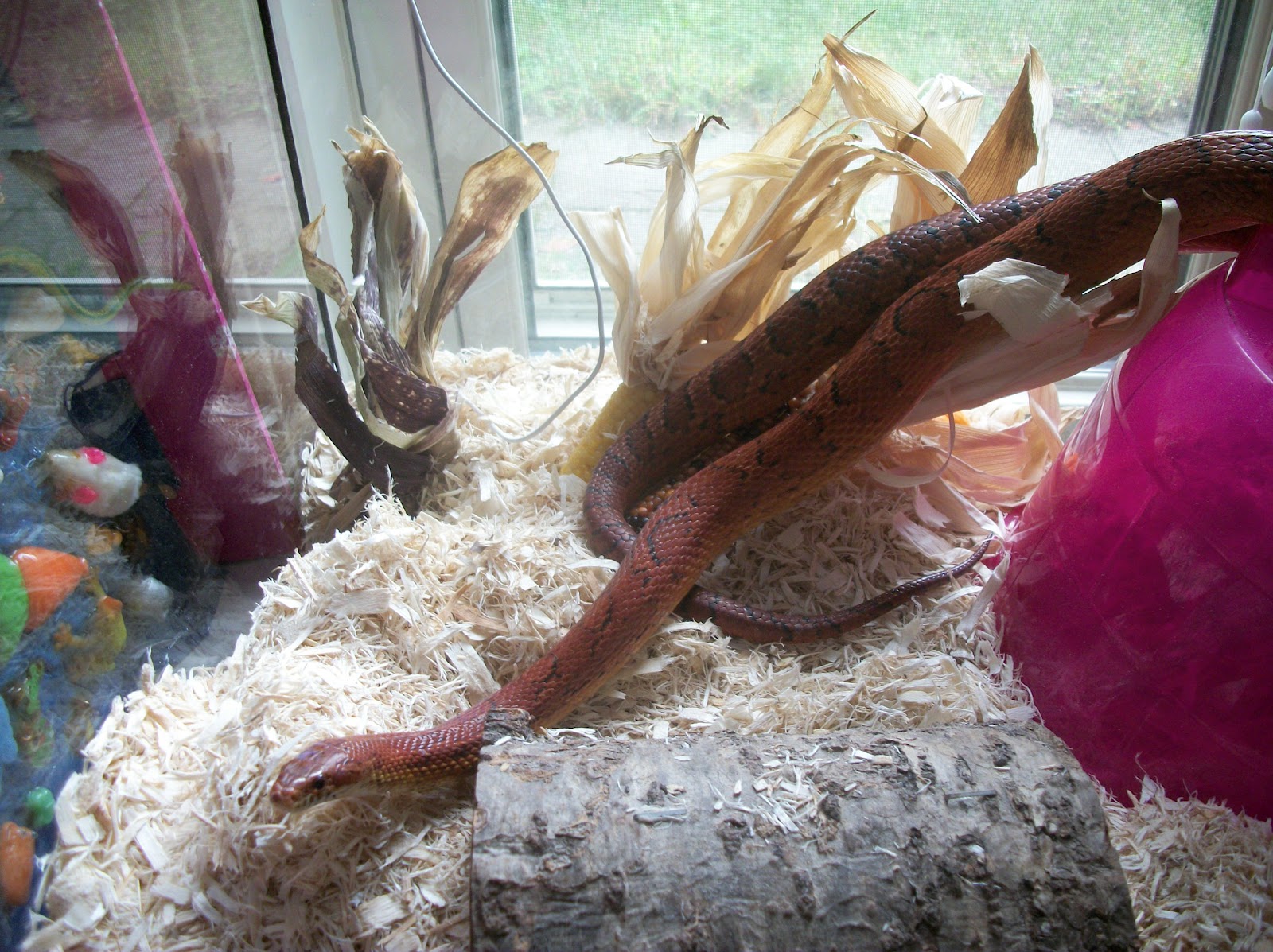
This past summer, we found the book Awesome Snake Science in a science museum gift shop, and with a budding herpetologist, it seemed a natural for a homeschool co-op. Since we have since acquired a pet snake, we decided this would a good chance to do some science and share our special friend, Wadjet the corn snake, with some of our homeschool friends.
To prepare for the activities, we picked a few from the book, and created record sheets, which were put in a folder for each child to create their own record book.
We started out making our own see-through snakes. We used canvas snakes from Oriental trading, and, using diagrams printed from online, turned them into "Zombie Snakes", which showed the skeleton on one side and the various organs on the other, learning a little about snake anatomy.


We then met and touched Wadjet, and learned a little about corn snakes.


We used Jello and pineapple juice to see the effect that anticoagulants in snake venom have on blood, and tried to cut off the flow of blood through a straw "Artery" (and discovered constricting is harder than it looks!)


We then went "herping", indoors style. We looked for hiding snakes all over the house (this was supposed to be in the yard, but it was raining), and recorded our data as to where we found each snake, what it was doing, and our estimates on size. We then collected and measured our snakes to see how accurate we were.


Afterwards, we watched Wadjet constrict and eat a (frozen/thawed) mouse.


 We used the Deck of Snakes and selected a snake pattern. We then built these out of legos. We challenged our parents to see if they could match the snake cards to our lego snakes. We also created our own snakey lego creations.
Finally, we had a Snake cake, with "rattlesnake venom" (Pineapple juice) to drink.

To prepare for the activities, we picked a few from the book, and created record sheets, which were put in a folder for each child to create their own record book.
We started out making our own see-through snakes. We used canvas snakes from Oriental trading, and, using diagrams printed from online, turned them into "Zombie Snakes", which showed the skeleton on one side and the various organs on the other, learning a little about snake anatomy.


We then met and touched Wadjet, and learned a little about corn snakes.

We used Jello and pineapple juice to see the effect that anticoagulants in snake venom have on blood, and tried to cut off the flow of blood through a straw "Artery" (and discovered constricting is harder than it looks!)


We then went "herping", indoors style. We looked for hiding snakes all over the house (this was supposed to be in the yard, but it was raining), and recorded our data as to where we found each snake, what it was doing, and our estimates on size. We then collected and measured our snakes to see how accurate we were.


Afterwards, we watched Wadjet constrict and eat a (frozen/thawed) mouse.


Finally, we had a Snake cake, with "rattlesnake venom" (Pineapple juice) to drink.

Monday, July 16, 2012
Getting teachers on your side-finding the right fit for gifted young children:

This post is part of the Parenting the Gifted Blog tour.
For the last 20 years, I've taught young children-in
settings for infants, toddlers, preschoolers, and elementary students, in
dedicated music classrooms and general ed classrooms. And I'm also a homeschool mom of a 7 1/2 yr old gifted
daughter. Over the last 7 years, I've discovered just how much I didn't know
about gifted children as a teacher, and I've discovered that it's not always
easier to find a good fit for my child as a parent-while at the same time,
needing/wanting educational and social opportunities for my daughter. For the
last few years, I've had the opportunity to help educate teachers about what
giftedness can look like in preschoolers and what parents and gifted young
children need teachers to understand. Now, as part of the blog tour, I'm going
to try to reverse what I've learned and help parents find ways to smooth that
path and find a good fit for their child.
1) Do your research. The fact is that giftedness isn't easy
to deal with as a parent OR as a teacher. It's so easy, as a parent, to hear
that a friend's child is having a great time in Kindermusik and comes home
tired and takes a good nap and it's heavenly and think "Oh, I could use
that! Discussions at the park often turn to the best preschools and the best
programs. But your child isn't their
child, and what can be a great experience for their child may turn out to be a
horrible one for yours, and for you.
The first step is the website. In most cases, parent policy
manuals will be online and you can get a lot of questions answered there. You
can get a good idea about a program's flexibility and the general feel there. My
experience as a parent and a teacher is that the more open a program is, the
easier it is on both sides. A preschool that uses a structured curriculum
starting at age 3 that's trying to teach a letter of the week will likely be
less capable to meet the needs of a gifted child who taught themselves the
letters at age 1 than something more flexible. Be aware that Developmentally
Appropriate can be just as limiting as something academic.
For elective classes, look for programs where age levels
overlap and where there's a focus on developmental readiness rather than cutoff
ages. If there are multiple classes and multiple opportunities for children in
the same age range, each of which is structured slightly differently, there's a
lot higher chance of finding a good fit.
For programs that are providing child care as part of their
mission, which includes many preschools, it's worth it to check on your state's
child care regulations as far as age groups, child staff ratios, toilet
training requirements, and so on. If the maximum child-staff ratio for age 2-3
is 8 to 1 and it's 10-1 for age 3-4, if your child is 2, it doesn't matter
whether they're cognitively more like a 4 yr old, The law requires that in
order for your child to be included in the classroom, the ratio has to be 8-1
at maximum. It doesn't matter how flexible the teacher or director is-if they
already have a 9-1 ratio in the 3-4 yr old class, they cannot move your child
up without either losing enough students to go below that ratio, or hiring
another teacher. If, however, they have a ratio that's less than 8-1, you can
make a case. If a child is not completely toilet trained, this requires a lower
ratio and requires that a classroom meets other requirements. This can mean that a program won't work for
your child right now-but it also can open doors that perhaps might not be
considered. For example, at age 2, my daughter was able to participate in
a class at a Mother's Day Out program
that was designed for "young 3s/4s"-that is, it was a class for
preschool-aged children who were ready for preschool content, but were a little
slow on toilet training and needed extra prompting/schedule. Because it had to
meet the child care regulations for non-toilet trained children, it met the
requirements for a 2 yr old, while giving my daughter the higher level content
and peer group that was a better fit for her.
2) Try it out-
The next step is to try to visit as many of the
classes/settings as you can. At minimum, try to visit your child's age group
and the next one up, and if there's more than one teacher teaching, try to see
both in action. If possible, visit without your child the first time so you can
sit back and observe. Observe the way the teacher interacts with the children
and the level of flexibility. If you're really lucky, you'll find a great fit
this way that isn't going to take a lot of modification and a teacher who makes
your heart slow down a little because you realize that it's going to be OK. If
not, you should have a good idea of what is needed. It may take multiple
attempts with multiple programs to get past this step, but it's worth it. Be
aware that, especially in programs like music classes that two different
classes in a given age group, using the same curriculum and the same teacher
may have a completely different feel. If you have an advanced 3 yr old and
there's a preschool music class that contains mostly children who are barely 3
and one that is mostly children who are 5 but missed the kindergarten cutoff,
it's likely the latter will be a better fit. On the other hand, a class with
mostly younger children can sometimes be an excellent fit for a child who has
sensory or motor issues with a supportive teacher and allow them to work on
these in a safe environment.
3) Talk it out- After you've found a setting that may be a
good fit, arrange a sit down with the teacher, or at least a phone
conversation. This isn't something to do in the 5-15 minutes between classes,
or when the teacher has other children in the room, or when the teacher is
trying to get home to her children. The more consideration you can give up
front, the greater chance you'll be listened to. Teachers are human, too, and
when we're worried about whether our husband has woken up or whether we'll get
home to discover that OUR gifted preschooler has dismantled the living room
while he's sleeping in (happened to me when I was teaching Saturday morning
music classes), we're not going to be as understanding of your concerns about
the class pace being too slow to keep your gifted preschooler interested as we
might be if you let us make the call after our gifted preschooler is in bed
happily reading. A face to face
conference is always better than a phone call. E-mail is a last resort. To be
honest, just asking for a conference up front makes us aware that your child
really is something special and out of the ordinary, because it's so rare.
4) Don't say the G word-or, how not to be one of
"those" parents.
The fact is that preschool activity classes and preschools
in general, sometimes resemble Lake Woebegone. And it's not even all in the
eyes of doting parents, either. Good preschool activity programs, and good
preschools, tend to be expensive. When I taught at a University based arts
program, almost all my students came from parents with high education levels.
Many of my parents were graduate students or faculty at one of several
universities, the law school, the medical school, or some of the varied Allied
health schools. Many of my parents were international students or working in
the USA on an H1B visa. Almost all of them fit the personality profile of
"gifted perfectionist professional" to a T. And not surprisingly,
most of their children were developmentally advanced. I had some classes where
almost every child in the room would have fit on Ruf's levels somewhere. And
those were a blessing to teach. But one side effect of that was that I noticed
something. Almost always, the parents who were in the strongest "My child
is gifted, let me show you" mode, pressuring their preschooler to
demonstrate that they could X (read, play mary had a little lamb on the piano,
identify pitches, add numbers....) were the parents who actually had children
who were bright, but really didn't require anything extra on my part. They came
into class, loved finally being able to work at their own pace, and I did my
best to spin what they were doing in ways that kept their parents happy so that
they didn't put extra pressure on their child, who often was seeing me as part
of a gauntlet of preschool, Jr. Kumon, Music classes, dance classes, language
classes, art classes and maybe, just maybe, a nap thrown in with Mozart playing
in the background.
The result of that was that even when I was realizing that my
OWN child was "gifted", I had acquired a real hatred of the word
professionally. The word didn't tell me anything about the child. It told me
much, much more about the parent. And this leads to problems when you truly
have a gifted child, because what do you say when the actual, diagnostic label has acquired a negative connotation?
The thing to think about is-what are the most important
things about my child? What do I need to know to get through a day with my
child? Too often parents tell me what their child can do, not who their child
is. The fact is, if a child matches pitch beautifully, or can name a middle C each
time she hears it, or can read, I'm going to figure it out very quickly simply
by the nature of my class because those are skills we're working on developing
and the child will demonstrate them and show me they need more. What I DO need
to know up front are the things that can affect behavior and that I can manage
it if I tweak the presentation a little to match the needs of a gifted learner.
You don't have to have all the answers-but if you tell me the behavior and give
me an example of how YOU handle it, it gives me a place to start even if I
can't use it in the same way.
For example, if your child learns something the first time
they hear it, but is shy, that's useful information so that I don't assume that
the child hasn't learned it because of their reluctance to respond. (This is
actually a very common combination for verbally advanced preschoolers-often
they're very self-conscious about age 4 or so, and will become quite disruptive
if the class is too repetitive). If I know your child needs little repetition,
but also needs time to become comfortable, I can add instrument parts and
extensions to provide the enrichment he needs while also providing the time for
him to become familiar with the setting and the repetition the other children
need. If your child is a kinesthetic learner and learns best by moving, that's
helpful because I can vary the activities to provide that need, or allow your
child to stand and walk at the back of the room. If your child has sensory issues and doesn't
like to be touched, that's helpful so I know that your child isn't refusing to
be part of the circle because they're oppositional or having a bad day. If your child gets sudden ideas that he has to
talk about now and will continue talking for 30 minutes if you give him the
opportunity, and you've discovered that drawing lets him release this without
being quite so annoying at home, PLEASE tell me so I can make sure I have paper
and a pencil ready before I have 6 bored 3 yr olds listening to your child's 25
minute saga on the feather he found that fell from a quetzalcoatlus that flew
from the dinosaur planet! (Kindermusik Imagine That, with it's open ended
verbal prompts, is notorious for prompting exactly that sort of verbal response
from imaginative, gifted preschoolers-and we'd REALLY appreciate a warning!).
If all you can give us is "He thinks and talks and
moves constantly, and he's driving me crazy! I need a break!!!", that's fine too-that is honestly more
helpful to me, as a teacher, than "He's reading on a 3rd grade level".
An added bonus of framing things behaviorally is that it
will tell you a lot about whether the teacher is a good fit by how the teacher
reacts. If the teacher responds to a statement that your child learns
kinesthetically and often needs to move with a comment like "We're up
moving a lot, and we'll see if it's enough. If not, I have fidgets we can
use", you're probably in good hands. If the response is "All our
children are gifted, so I'm sure he'll be just fine", look elsewhere. And
if her response is "Well, he'll just have to learn to sit and
listen", run away!
4) Good key words to use. Most teachers participate in
in-service training constantly, and many programs really push teacher education
and continuing education hard. Furthermore, special ed is a big focus area,
particularly when it comes to awareness of disabilities like autism, CAPD, and
learning disabilities. There has been a lot of focus on hidden disabilities and
accommodating those, and a lot of awareness that such disabilities do not
necessarily relate to intelligence at all. That's one reason why I've been able
to wave the gifted flag at national and international conferences and get it
incorporated into curriculum at a corporate level, because I've been able to
frame it as a special education issue. The more you can use words that a teacher
is familiar with from special education training, the more she, even if she's
not responsive to "gifted" as a label, is likely to be able to come
to the point you need her to be at, which is to see your child as a person for
whom high intelligence is part of the package, but isn't the entire package.
Asynchronous development is a wonderful word to use (if you have an
asynchronous child, and most preschoolers who are later identified as gifted
are asynchronous at that point, even if they end up being more globally
advanced later) because if a teacher knows anything about giftedness, they'll
recognize the code for what is it-and if they don't, they'll usually ask what
that means and you can then explain that he's speaking in complex sentences and
paragraphs more typical of a 5 yr old than a 2 yr old, but is all 2 if
something doesn't go his way, including biting when frustrated. After you've
explained the behaviors, and given the child a few weeks to settle into class,
often you'll have the teachers commenting about "He's very smart, isn't
he?" or "Did you know she was reading?"-and THAT'S when you can
say that "I've read quite a bit about giftedness online, and I think she
might be gifted. What do you think?". Intense is another word that often
opens up a conversation.
5) Hammer-Nail syndrome. If you, when describing your child
behaviorally, find that the teacher constantly brings up a specific label that
is contrary to your observations (Autism is the most common, because so many
teachers have gone to in-services and read articles, and think they know what
it .looks like), it's a good idea to look elsewhere. While it's true that there
are some symptoms that overlap, my experience as a parent, and from what I've
seen when I've observed teachers is that this usually ends up being a miserable
experience for the child and leads to more and more extreme behaviors, which
then leads to the teacher labeling the child more fully, and its a vicious
circle. Teachers need more education on what giftedness looks like in
preschoolers, but it's not up to your child to be a case study out of
"Diagnosis and Misdiagnosis". Find something else.
6) After you've found what looks like a good fit, try it
out. It usually takes 5-6 once a week classes, or a couple of weeks of a full-day
preschool before a child starts relaxing enough to really start being
themselves. If, after a couple of months, it's not a good fit, usually if
you've prepared the teacher, they'll tell you. Be aware that some gifted (and
non-gifted, for that matter) preschoolers are master manipulators. If a child
knows you feel guilty about sending them to preschool, they can play on that.
If your child is truly miserable, it won't be just a case of complaining on the
way to and from for the first few weeks, and the teacher telling you they're
perfectly happy once you leave. It will be a case of the child showing you by
their behavior all day, every day that something is wrong and the teacher
telling you that it's wrong in the class setting, too. Trust your instincts,
but assume it's right unless your child really shows serious behavioral
changes. I've taught a couple of children of parents who had been badly burned
in other settings and are very nervous about trying a new one, who questioned
everything when the child was fine because they were waiting for the other shoe
to drop. For that matter, I've BEEN that parent, waiting for another shoe to
drop. It's tough to do, but relax and try it out.
7) When you've found a good fit, for now, don't look to the
future yet. If they're happy and learning, you've found the Holy Grail. Don't
look for another until you need to do so. Often this is something you'll have
to reassure the teacher on, too. Some of the saddest, most regretful parent
responses I got in my surveys were parents who had a child who was very, very
happy in a class at their age/grade level or just above, but had a
teacher/coach who was very convinced the child was the next great musician,
dancer, gymnast or whatever, and wanted to push the child ahead, taking them
out of group classes and to private lessons, increasing the gym time, or
whatever. A gifted preschooler who has greater focus and concentration than
other children their age can look like a prodigy in almost anything, and
teachers love nothing more than to have a child who loves what they love. But
that can easily lead to putting a level of responsibility on a young child who
isn't ready for it yet, and who really likes things the way they are right now.
Almost invariably, the child pushes back and what was a loved activity becomes
a hated one. When the child wants more gym time, to take private piano instead
of group classes, or to go to a higher age group, they'll tell you/show you.
Either they'll start asking explicitly to move up, or they'll start being bored
and reacting to boredom. When that happens, THEN you make a change. Until then,
enjoy the peace!
I hope this stop on the "Parenting the Gifted" Blog tour was helpful to you. Please visit all the rest of our wonderful stops.
On July 16th Sceleratus Classical Academy will share “Don’t Panic! Musings about realizing that your child’s learning pattern is ahead of schedule.”
On July 17th Teaching My Baby to Read will feature “When School Isn’t Enough; Fanning the Flames of Learning Afterschool”.
On July 18th Homeschooling: or Who’s Ever Home will write about “A Broader Definition of Success for Gifted Children”.
On July 19th A Tree House Education will feature “2E Issues”. Homeschool in Florida will share “Get Out of Your Own Way: How to Listen to the Needs of Your Gifted Child”.
On July 20th Making Music With Kids will discuss “Finding a Good Fit for a Preschooler You Suspect is Gifted”. Barely Educational will offer “Worrying Too Much and Overanalyzing Parenting”
On July 21st Teaching My Baby to Read will feature guest posts. Dancing with Dragons will write about “Teaching the Visual Spatial Learner: When Your Child Thinks in Pictures”.
I hope this stop on the "Parenting the Gifted" Blog tour was helpful to you. Please visit all the rest of our wonderful stops.
From July 15-21 the Parenting the Gifted Blog Tour will discuss some of the most pertinent issues facing gifted education today:
On July 15th Childhood Inspired will write about “Loneliness as a Gifted Parent”. Our Roxaboxen Adventures will discuss “Identifying Gifted Minority Students”.On July 16th Sceleratus Classical Academy will share “Don’t Panic! Musings about realizing that your child’s learning pattern is ahead of schedule.”
On July 17th Teaching My Baby to Read will feature “When School Isn’t Enough; Fanning the Flames of Learning Afterschool”.
On July 18th Homeschooling: or Who’s Ever Home will write about “A Broader Definition of Success for Gifted Children”.
On July 19th A Tree House Education will feature “2E Issues”. Homeschool in Florida will share “Get Out of Your Own Way: How to Listen to the Needs of Your Gifted Child”.
On July 20th Making Music With Kids will discuss “Finding a Good Fit for a Preschooler You Suspect is Gifted”. Barely Educational will offer “Worrying Too Much and Overanalyzing Parenting”
On July 21st Teaching My Baby to Read will feature guest posts. Dancing with Dragons will write about “Teaching the Visual Spatial Learner: When Your Child Thinks in Pictures”.
Monday, July 9, 2012
Where there's a will, there's a (lego) way!
Alli's been very excited about Algebra recently and has burned through Hands on Equations, so I wanted to get her the Algeblocks I remember from my math ed grad program. What I discovered, quickly, was that those suckers are a) expensive and b) not available in any quantity below study group size, which, for one child working at home alone, doesn't quite fit our needs. I found printable versions, but making a 3d item 2d in many ways makes them inferior to Algebra tiles, which are designed to be 2d.
So, I was thrilled when I found a lot of Algeblocks on Ebay, which I got for $10 including shipping. I could tell that the green 1 cm unit cubes were missing, but we have enough math manipulatives around that I knew I could substitute something, and that if I wanted green I could probably buy them quite cheaply, so that didn't worry me.
What I'd missed, though, until I got the box today, was that I was missing the X and Y rods. And Algeblocks are designed so that the X and Ys are NOT a whole multiple of units, making substituting with Cuisinaire rods not an option unless I wanted to do some really, really exact sawing.
But where there's a will, there's a way-especially in a house full of legos. As it turns out, X's are exactly the length of a 4 peg lego brick, and a 1x4 fits the factor track quite well. 1x6 works almost as well for Y! So, we dug through the most common colors in Alli's lego bin and easily found a large handful of Xs and Ys to build equations with. And 1s, too, since we decided to keep with the theme.
We decided against matching the Algeblock colors because orange is a rare color for legos, and even Yellow isn't the most common color in the sets Alli enjoys. But between Pharoah's Quest, Castle, Harry Potter, and other sets with buildings, we're long on beige and grey, so we picked beige for X, grey for Y, and dark grey for 1.
The best part of this is that I'd downloaded the Algebra Lab Gear manual, which mostly, but not quite, works with Algeblocks. The primary difference is a few specific pieces. Since we've discovered that legos are compatibly sized, that lets me build any extra pieces we need.
So, if you're considering algeblocks, consider getting out the legos!


So, I was thrilled when I found a lot of Algeblocks on Ebay, which I got for $10 including shipping. I could tell that the green 1 cm unit cubes were missing, but we have enough math manipulatives around that I knew I could substitute something, and that if I wanted green I could probably buy them quite cheaply, so that didn't worry me.
What I'd missed, though, until I got the box today, was that I was missing the X and Y rods. And Algeblocks are designed so that the X and Ys are NOT a whole multiple of units, making substituting with Cuisinaire rods not an option unless I wanted to do some really, really exact sawing.
But where there's a will, there's a way-especially in a house full of legos. As it turns out, X's are exactly the length of a 4 peg lego brick, and a 1x4 fits the factor track quite well. 1x6 works almost as well for Y! So, we dug through the most common colors in Alli's lego bin and easily found a large handful of Xs and Ys to build equations with. And 1s, too, since we decided to keep with the theme.
We decided against matching the Algeblock colors because orange is a rare color for legos, and even Yellow isn't the most common color in the sets Alli enjoys. But between Pharoah's Quest, Castle, Harry Potter, and other sets with buildings, we're long on beige and grey, so we picked beige for X, grey for Y, and dark grey for 1.
The best part of this is that I'd downloaded the Algebra Lab Gear manual, which mostly, but not quite, works with Algeblocks. The primary difference is a few specific pieces. Since we've discovered that legos are compatibly sized, that lets me build any extra pieces we need.
So, if you're considering algeblocks, consider getting out the legos!


Subscribe to:
Posts (Atom)