Thanks to some KM colleagues in Newfoundland, CA, for recommending this wonderful-and much more authentic version of "Lukey's Boat"
Enjoy!
Wednesday, September 21, 2011

Monday, September 19, 2011
Music at Home-Bathtime fun
I'm sure you've enjoyed Pete, PJ, and Wishy Washy WEE this semester so far! Here are some more wonderful Bathtime fun suggestions-sing, play and enjoy, from the folks at Family Fun Magazine!
Have a great week!
Music at home-The highs and lows of it
This week our lesson focus was all about levels in movement. So much of life is experienced without exploring the extremes of high and low. Stretching outside of the normal range of movement can enhance awareness of our bodies in space, coordination, balance, and creative expression through movement. Moving high and low translates fairly easily to children of all ages. Hands and arms can be moved high and low; babies can be lifted into the air; and movements can incorporate crouching and stretching, crawling and walking high on tip-toes. On the piano, high notes are to the far right, and low notes are to the far left. If you have a piano or other instrument at home, try playing High and low notes, and encourage your child to move in response to the music. Scarves, streamers, or pieces of ribbon (with supervision, of course) can add another dimension to this activity. And if you have one, a Slinky is great to stretch and snap back to demonstrate levels in sound AND levels in movement!
If you haven't done so yet, visit play.kindermusik.com and use the card from your home materials to download the CDs from class. While this is the same music you have on your class CDs, you will also be able to download the lyrics from all the songs and extra activities to sing, play, move and groove. As mentioned in class, these are wonderful for those cold, wet or otherwise out of sorts days when parents and kids both need a break, for babysitters who might appreciate a little extra help in finding some way to play with a child, or for visiting grandparents.
Have a wonderful week!
Music at home- Play the black keys!
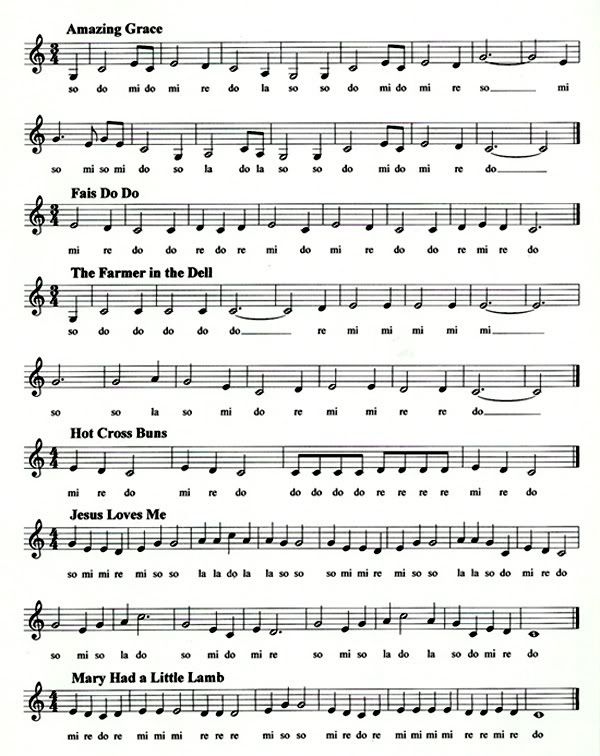
Other activities from this week:
Practice locating lines and spaces on the staff, and counting from the bottom-first line, 2nd line, first space, and so on. This is a helpful skill in later music reading.
Practice making and reading 4 count rhythms using the quarter note (ta) and the quarter rest (shh) symbols. The song "I like to play the sticks" is designed for this task.
Have fun!
Friday, September 16, 2011
The secret to success?
http://www.nytimes.com/2011/09/18/magazine/what-if-the-secret-to-success-is-failure.html
I found this article very interesting, because as a Kindermusik/Orff Schelwerk trained teacher I'm all about incremental development and the chance to experiment without risk of failure or mistakes. And this seems, at first glance to contradict this idea. But as I read further, I started to feel really good about what I do as a teacher, as a music parent. Because, see, music is one area where, while I can set it up so there's no complete failure, there's also no complete success. This is why those early songs keep recurring-the child might rock to a song as an infant, play rhythm instruments to it or move to it as a toddler, sing it as a preschooler, and play it on an instrument as an early school aged child. What's more, once they've learned the song on an instrument, they'll first work on just finding those notes in the appropriate order, and then on making sure rhythms are correct, moving on to articulations and expressive development. In each step, each successive success, each successive step builds-but at the same time, it's NEVER perfect. It never can be. So each success comes with it a corresponding "failure". Not a big one, not a total failure (although anyone who is involved in music long-term will eventually have one, or many), and maybe not even one recognized by casual listeners-but you know.
That's very different from academics-where success is reaching a pre-identified number, and it's not possible to do better than perfect, at which time you go on to the next step. Once you've got 100% on a spelling list of 10 words, there's not much else you're going to learn from those words. Once you've mastered adding 1 digit numbers, you're not going to get much out of practicing them except for maybe a little more speed. But in music, you can ALWAYS get more out of a piece. You can always extend, You can always grow. You can always do it a different way.
The same is true with other fine arts. I have yet to know an artist who is happy with a completed work for very long-they always see the next step. Dancers and actors are their own worst critics-and best teachers. I'm not saying fine and performing arts is the only way to get this experience of success and failure simultaneously, or that it's the only way to build character-but it definitely helps, and I'm very, very honored and glad to be able to be part of it for my students.
I found this article very interesting, because as a Kindermusik/Orff Schelwerk trained teacher I'm all about incremental development and the chance to experiment without risk of failure or mistakes. And this seems, at first glance to contradict this idea. But as I read further, I started to feel really good about what I do as a teacher, as a music parent. Because, see, music is one area where, while I can set it up so there's no complete failure, there's also no complete success. This is why those early songs keep recurring-the child might rock to a song as an infant, play rhythm instruments to it or move to it as a toddler, sing it as a preschooler, and play it on an instrument as an early school aged child. What's more, once they've learned the song on an instrument, they'll first work on just finding those notes in the appropriate order, and then on making sure rhythms are correct, moving on to articulations and expressive development. In each step, each successive success, each successive step builds-but at the same time, it's NEVER perfect. It never can be. So each success comes with it a corresponding "failure". Not a big one, not a total failure (although anyone who is involved in music long-term will eventually have one, or many), and maybe not even one recognized by casual listeners-but you know.
That's very different from academics-where success is reaching a pre-identified number, and it's not possible to do better than perfect, at which time you go on to the next step. Once you've got 100% on a spelling list of 10 words, there's not much else you're going to learn from those words. Once you've mastered adding 1 digit numbers, you're not going to get much out of practicing them except for maybe a little more speed. But in music, you can ALWAYS get more out of a piece. You can always extend, You can always grow. You can always do it a different way.
The same is true with other fine arts. I have yet to know an artist who is happy with a completed work for very long-they always see the next step. Dancers and actors are their own worst critics-and best teachers. I'm not saying fine and performing arts is the only way to get this experience of success and failure simultaneously, or that it's the only way to build character-but it definitely helps, and I'm very, very honored and glad to be able to be part of it for my students.
Monday, September 12, 2011
Scholastic Teacher Express $1 Sale-through 9/20
Scholastic occasionally does e-book sales where you can do digital downloads for $1 each. These are great for homeschooling, or just for extra fun activities to do. For my fellow Kindermusik teachers, especially those who teach ABC, these can be great extras to send home, too.
Turn to learn-make interactive books and activities to reinforce many key learning skills.
http://teacherexpress.scholastic.com/turn-to-learn
Pocket charts are a great way to play with literacy-especially if you got the $1 ones from Target last month!
http://teacherexpress.scholastic.com/the-pocket-chart-book
More Creatures in my Backyard, anyone?
http://teacherexpress.scholastic.com/early-themes-creepy-crawlies-butterflies-bees-ladybugs-and-more
Tunes that Teach American history-more for older kids than little ones, but these are a lot of fun. I actually bought this book at $14.95 for my 6 yr old.
http://teacherexpress.scholastic.com/tunes-that-teach-american-history
Tunes that teach Spelling-again, not necessarily for the littlest ones, but a great price for the early school-age child
http://teacherexpress.scholastic.com/tunes-that-teach-spelling
Great for sending notes to students, or for "I've got a Letter this morning".
http://teacherexpress.scholastic.com/great-shapes-stationery
Wonderful resource-for home or for school
http://teacherexpress.scholastic.com/the-great-big-book-of-classroom-songs-rhymes-cheers
Songs for throughout the year!
http://teacherexpress.scholastic.com/sing-along-and-learn-around-the-year-with-audio-cd
Sing and learn-Following directions
We can always use help there, right?
http://teacherexpress.scholastic.com/sing-along-and-learn-following-directions
Rhymers are readers!
http://teacherexpress.scholastic.com/101-thematic-poems-for-emergent-readers
Caring, sharing and getting along-poems for social skills
http://teacherexpress.scholastic.com/caring-sharing-getting-along
ABC-123 Coloring pages
http://teacherexpress.scholastic.com/abc-123-coloring-book
Art Activities for early learners
http://teacherexpress.scholastic.com/art-activities-for-little-learners
Move and Learn early concepts
http://teacherexpress.scholastic.com/move-learn-early-concepts
Fun and easy brain based activities for early learners
http://teacherexpress.scholastic.com/50-fun-easy-brain-based-activities-for-young-learners
50 Learning songs sung to your favorite tunes
http://teacherexpress.scholastic.com/50-learning-songs-sung-to-your-favorite-tunes
Turn to learn-make interactive books and activities to reinforce many key learning skills.
http://teacherexpress.scholastic.com/turn-to-learn
Pocket charts are a great way to play with literacy-especially if you got the $1 ones from Target last month!
http://teacherexpress.scholastic.com/the-pocket-chart-book
More Creatures in my Backyard, anyone?
http://teacherexpress.scholastic.com/early-themes-creepy-crawlies-butterflies-bees-ladybugs-and-more
Tunes that Teach American history-more for older kids than little ones, but these are a lot of fun. I actually bought this book at $14.95 for my 6 yr old.
http://teacherexpress.scholastic.com/tunes-that-teach-american-history
Tunes that teach Spelling-again, not necessarily for the littlest ones, but a great price for the early school-age child
http://teacherexpress.scholastic.com/tunes-that-teach-spelling
Great for sending notes to students, or for "I've got a Letter this morning".
http://teacherexpress.scholastic.com/great-shapes-stationery
Wonderful resource-for home or for school
http://teacherexpress.scholastic.com/the-great-big-book-of-classroom-songs-rhymes-cheers
Songs for throughout the year!
http://teacherexpress.scholastic.com/sing-along-and-learn-around-the-year-with-audio-cd
Sing and learn-Following directions
We can always use help there, right?
http://teacherexpress.scholastic.com/sing-along-and-learn-following-directions
Rhymers are readers!
http://teacherexpress.scholastic.com/101-thematic-poems-for-emergent-readers
Caring, sharing and getting along-poems for social skills
http://teacherexpress.scholastic.com/caring-sharing-getting-along
ABC-123 Coloring pages
http://teacherexpress.scholastic.com/abc-123-coloring-book
Art Activities for early learners
http://teacherexpress.scholastic.com/art-activities-for-little-learners
Move and Learn early concepts
http://teacherexpress.scholastic.com/move-learn-early-concepts
Fun and easy brain based activities for early learners
http://teacherexpress.scholastic.com/50-fun-easy-brain-based-activities-for-young-learners
50 Learning songs sung to your favorite tunes
http://teacherexpress.scholastic.com/50-learning-songs-sung-to-your-favorite-tunes
Music this week-Jumping Beans
We had a wonderful week moving and jumping and playing and singing together! Welcome to our Lipman families and to Kenneth and Kiersten at PAC!
Keyboard skills-This week we explored the black and white keys of the piano by finding groups of 2 and 3 black keys and exploring these. As Kenneth showed us, you can play many songs using just the black keys, including the start of Amazing Grace. This is because the black keys fall in the pentatonic scale, which is commonly used in children's music and folk music, and is a great place to begin piano exploration. If you have a piano or keyboard at home, consider trying it this week!
Music theory-We also worked with the quarter note and quarter rest symbols, Ta and Shh, making and reading rhythms, exploring an imaginary rainforest, and practicing moving and freezing. Your child took home four rhythm cards which can be cut apart to make quarter notes, quarter rests, and two eighth notes (we haven't introduced this last symbol in class, but we'll get there). Try having your child make a pattern of four note and rest cards and read them by tapping, clapping, or using Ta and Shh.
Theme exploration-Our theme for this first unit is the music of Latin America, and we explored several songs from various Latin American countries, including working on some Spanish vocabulary. The children were thrilled to share their prior knowledge with the group.
To continue this, here is a printable book in Spanish
http://www.hubbardscupboard.org/Spanish_Teacher_Version_At_the_Farm.pdf
and in English
http://www.hubbardscupboard.org/Teacher_Version_28_-_At_the_Farm.pdf
Some of you who registered early received home materials today. If you registered later, your home materials have been ordered, but have not yet arrived. We will get you these as soon as possible. If you did get home materials today, I suggest copying or backing up the CD to your computer or Mp3 player. The more you listen to the CD (in the car is often a wonderful place for this) the more your child will be able to participate in and enjoy class, and it always seems that the CD that is most liked and used is the one that vanishes or is damaged beyond repair. Your home materials also include a home activity guide with a story to share, activities to do, and a panpipes instrument to explore.
Have a great week and enjoy making music together!
Keyboard skills-This week we explored the black and white keys of the piano by finding groups of 2 and 3 black keys and exploring these. As Kenneth showed us, you can play many songs using just the black keys, including the start of Amazing Grace. This is because the black keys fall in the pentatonic scale, which is commonly used in children's music and folk music, and is a great place to begin piano exploration. If you have a piano or keyboard at home, consider trying it this week!
Music theory-We also worked with the quarter note and quarter rest symbols, Ta and Shh, making and reading rhythms, exploring an imaginary rainforest, and practicing moving and freezing. Your child took home four rhythm cards which can be cut apart to make quarter notes, quarter rests, and two eighth notes (we haven't introduced this last symbol in class, but we'll get there). Try having your child make a pattern of four note and rest cards and read them by tapping, clapping, or using Ta and Shh.
Theme exploration-Our theme for this first unit is the music of Latin America, and we explored several songs from various Latin American countries, including working on some Spanish vocabulary. The children were thrilled to share their prior knowledge with the group.
To continue this, here is a printable book in Spanish
http://www.hubbardscupboard.org/Spanish_Teacher_Version_At_the_Farm.pdf
and in English
http://www.hubbardscupboard.org/Teacher_Version_28_-_At_the_Farm.pdf
Some of you who registered early received home materials today. If you registered later, your home materials have been ordered, but have not yet arrived. We will get you these as soon as possible. If you did get home materials today, I suggest copying or backing up the CD to your computer or Mp3 player. The more you listen to the CD (in the car is often a wonderful place for this) the more your child will be able to participate in and enjoy class, and it always seems that the CD that is most liked and used is the one that vanishes or is damaged beyond repair. Your home materials also include a home activity guide with a story to share, activities to do, and a panpipes instrument to explore.
Have a great week and enjoy making music together!
Subscribe to:
Posts (Atom)