Alli and I are continuing to explore, even though it's getting hot here (A/C troubles).
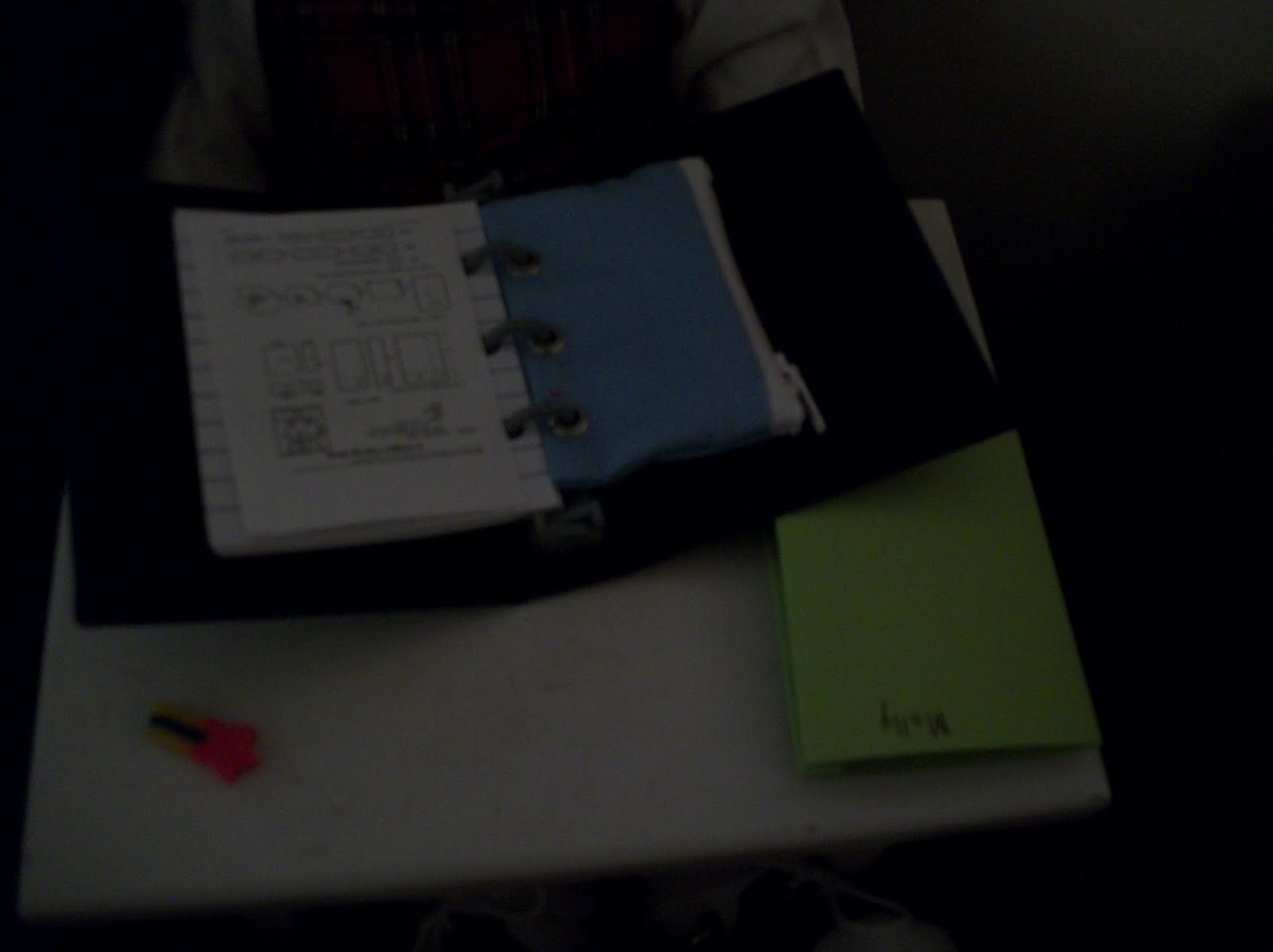
We've discovered that printing 16-1 on a laser printer turns e-books and online worksheets into a nice scale for dolls and stuffed animals, and that word cards, with a little alteration, become good folders. I bought the tiny colored pencils from Oriental trading a couple of years back when we were doing HWOT and I wanted small things for DD to write with to build up her pencil grip. These were too small even for preschool hands, but are about right for toys. The desks are little step stools from the target $1 section a couple of years ago-we had a bunch of them around the house for DD to use in reaching light switches until she grew enough on her own, plus a bunch of plastic boxes I'd used at one point for manipulatives and puzzle pieces, until I got a ton of plastic drawers that worked better.
Classmates in the classroom :)
We're having a lot of fun with our explorations
Showing posts with label American girl. Show all posts
Monday, August 22, 2011
Tuesday, August 2, 2011
Practice as play-or, how do I get my child to practice?
http://www.bulletproofmusician.com/how-many-hours-a-day-should-you-practice/
This article brought practicing to mind. One of the hardest lessons that parents of young musicians need to learn is that practice doesn't just happen, You have to actively TEACH a child to practice, and that's not always easy. Here are a few suggestions I have for practicing with a young, beginning student that work...most of the time.
1) Have a set time to practice, with a set deadline. What works well for my daughter is to practice while a meal is cooking. She knows dinner will be ready "soon", so she doesn't feel that it's as interminable of a time period as "30 minutes" would be, and it's a flexible amount of time where I can pretty easily adjust it if she is really doing well and we want to follow this for awhile.
2) Teach someone else. My daughter does very, very well when she gets to teach someone else-usually her father (for some reason, she doesn't accept that I need to be taught), or even a stuffed animal or doll, her lesson. And in her explanations, I can tell that she's got it, or that she doesn't have it.
American Girl has 18 in doll sized musical instrument sets which seem perfect

It's almost enough to make me wish my daughter played violin, cello, or flute, but my daughter's found ways to create a piano and a recorder for her special friends.
Encouraging recitals helps, too. My daughter LOVES to put on concerts for her stuffed friends when she has a song ready-sometimes including programs.
I've also found, both with my Kindermusik Young Child students and at home, that focusing on repetitions instead of on time is a good way to go. Since Alfred, my alligator puppet, is my companion in Kindermusik classes, I let him help the children practice, too.
The kids push a bead around to "Feed" Alfred each time they play "mouse, mousie" or whatever song they're working on. And, of course, Alfred needs to eat EVERY day :). It's amazing how well this works. The beads and charms came from a necklace kit from Oriental trading-in this case, a "cajun crocodile" themed one, and there are all sorts of cute options. Each one makes 12 or more practice buddies (each necklace has 3 charms-in this kit, one alligator, one firefly, and one dragonfly, so if you don't have a specific mascot, you could easily make more than one per necklace).
I know that eventually, we'll get to the more deliberate practice talked about in the article-but right now, practice is play.
This article brought practicing to mind. One of the hardest lessons that parents of young musicians need to learn is that practice doesn't just happen, You have to actively TEACH a child to practice, and that's not always easy. Here are a few suggestions I have for practicing with a young, beginning student that work...most of the time.
1) Have a set time to practice, with a set deadline. What works well for my daughter is to practice while a meal is cooking. She knows dinner will be ready "soon", so she doesn't feel that it's as interminable of a time period as "30 minutes" would be, and it's a flexible amount of time where I can pretty easily adjust it if she is really doing well and we want to follow this for awhile.
2) Teach someone else. My daughter does very, very well when she gets to teach someone else-usually her father (for some reason, she doesn't accept that I need to be taught), or even a stuffed animal or doll, her lesson. And in her explanations, I can tell that she's got it, or that she doesn't have it.
American Girl has 18 in doll sized musical instrument sets which seem perfect
It's almost enough to make me wish my daughter played violin, cello, or flute, but my daughter's found ways to create a piano and a recorder for her special friends.
Encouraging recitals helps, too. My daughter LOVES to put on concerts for her stuffed friends when she has a song ready-sometimes including programs.
I've also found, both with my Kindermusik Young Child students and at home, that focusing on repetitions instead of on time is a good way to go. Since Alfred, my alligator puppet, is my companion in Kindermusik classes, I let him help the children practice, too.
The kids push a bead around to "Feed" Alfred each time they play "mouse, mousie" or whatever song they're working on. And, of course, Alfred needs to eat EVERY day :). It's amazing how well this works. The beads and charms came from a necklace kit from Oriental trading-in this case, a "cajun crocodile" themed one, and there are all sorts of cute options. Each one makes 12 or more practice buddies (each necklace has 3 charms-in this kit, one alligator, one firefly, and one dragonfly, so if you don't have a specific mascot, you could easily make more than one per necklace).
I know that eventually, we'll get to the more deliberate practice talked about in the article-but right now, practice is play.
Subscribe to:
Posts (Atom)


